Binnenkort op Mooimuziek

» Verboden Muziek
» De Hemelse X Factor van Rebecca Ferguson

gepubliceerd op woensdag 13 mei 2009

Exclusive Interview with Clay Drayton of Soul Excitement

40 Years ago, the sixties were nearing their end. It later proved to be the end of an era that had produced great music and the first of what came to be known as 'pop' music. One of these popular genres - now defined as 'funk' - brought us the names of James Brown, The Meters, Sly & The Family Stone and many others.
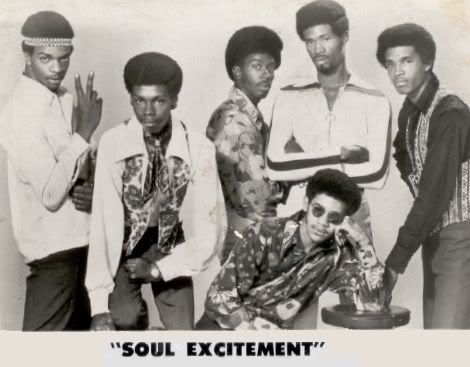
Soul Excitement Photo courtesy of Mr. Clay Drayton
The end of this era was the beginning of a new one. One in which black music became the true driving force. And like the sixties, the seventies brought a lot of new musical genres that conquered, and indeed ruled!, the world. These genres - like soul, disco and R&B - were predominantly 'black'. Their 'common denominator' was - still - funk with its roots in the previous decade. Funk became the calling card of illustrious bands and artists such as Parliament, Funkadelic, Mother's Finest, Bootsy's Rubber Band, Johny Guitar Watson, Cameo and The Bar-Kays.

Of course, these well-known acts were not the only ones that made great funk music. There may have been hundreds of other bands out there that rode the waves of the popular new music genre. Some were more succesful than others. And while some have not been able to escape from the abyss of time, others have survived - albeit just barely - and some of those were even re-released by such labels as Kay-Dee Records, Motown and Stax.

Soul Excitement
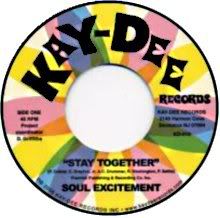
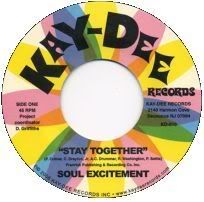
Label of the 45RPM re-release of 'Stay Together' by Soul Excitement Label of the 45RPM re-release of 'Stay Together' by Soul Excitement
Those that were less succesful were not always less in terms of quality. Like today, back then there were many ways for new young bands to shine brightly one week and implode the next, like red dwarfs dying in the galaxy. One of these bright new bands was called Soul Excitement. Its front man was Clay Drayton. I stumbled upon the band's name one night reading about the song "Stay Together" that was re-released by Kay-Dee Records and ordered this 'new' 45RPM vinyl re-release single.

Hearing it for the first time I became instantly interested. My interest was triggered not because "Stay Together" still sounds hot, new and funky though, which it does!, but actually because of the 'wild' intro the song starts-off with. It has the rythm of a Viennese Waltz and sounds exactly like a traditional Dutch children's song, that is sung on December 5th, celebrating the birthday of Saint Nicolas, who is believed to be a great children's friend. This waltz was originally written by a a seventeenth century bagpipe player from plague-ridden Vienna; see the article "Popmuziek is schatplichtig aan zeventiende eeuwse doedelzakspeler" (DutchEnglish: Pop music pays tribute to seventeenth century bagpipe player).

My 'quest' into the origins of the intro to Soul Excitement's only single eventually brought me in touch with Clay Drayton. Clay was the singer, bass player and frontman of Soul Excitement. As it turns out, Clay is still working with music. He was friendly enough to answer a few questions for this article.

Clay is the main author of the song "Stay Together", on which he cooperated with the other band members A.C. Drummer Jr. (Guitar), Roland Washington (Saxophone), Paul Cutner (Drums) and Paul Settle (Trumpet).
About the 'wild' intro to the song Clay remembers it was inspired by Sly and the Family Stone's intro to "Sing a Simple Song". He was not aware of the origins of the intro on "Stay Together" as described in the above mentioned article. However, he says, "I wrote it from an American children's song 'The more we get together, the happier we'll be'".

The origins of a psychedelic funk band

Soul Excitement only existed for a short number of years. On how the band was formed, Clay remembers: "I met AC when we were in a band called Cecil Garrett and the FascinationsCecil Garrett and the Fascinations: Cecil Garrett and the Fascinations were part of the sixties' Pittsburg sound. "Bearcat" is one of their better known records., I wanted to start a band of my own and AC came with me. We found the other band members.
AC's mother knew a couple who wanted to start their own record label. They liked us and paid for studio time and record pressing on their label 'Pink Dolphin Records'. We played at night clubs every weekend for four years."

At the "Rare Funk and Soul Forum" Roland Washington, the band's saxophone player, also remembers the exciting times with Soul Excitement:
"Soul Excitement was a psychedelic funk band out of Newark, New Jersey. The band was originally formed by Clarence (Clay) Drayton, who was the leader and bass player, along with AC Drummer, guitarist, and Paul Cutner, drummer in the year 1968. During the summer of that year they took on a young tenor saxophone player, Roland Washington.
The band concentrated primarily on performing songs of the current popular artists of that time with a deep, funky, driving spin on such songs as Stevie Wonder's "I Was Made To Love Her", Parliament Funkadelic's "Good Old Funky Music" and "I Just Want to Testify", the Temptations' "Runaway Child". Their repertoire was an endless chain of funky songs. Clay on bass and Paul on drums would always put the band right in the pocket of the groove. AC Drummer would fill the rest with some of the funkiest guitar strokes accented by fuzz and wah-wah.
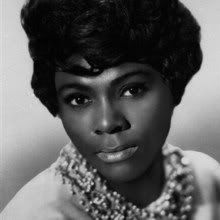
Dee Dee Warwick Dee Dee Warwick
The band enjoyed performing as regulars at such places as "The Cheetah" and "Trudy Heller's" in Manhattan. They were well loved wherever they performed. Soul Excitement also performed as backup band for Dee Dee Warwick and Linda Jones, two oustanding recording artists of that time. They performed on shows opposite the Delfonics, Unifics, Manhattans, Sam and Dave, Joe Tex and many other well known celebrities of that era.

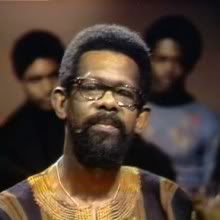
Ellis Haizlip, host of the Channel 13 show 'Soul!' Ellis Haizlip, host of the Channel 13 show 'Soul!, 13 Dec. 1972'
The band was later joined by Bernard "Captain Hook" Cutner as lead vocalist. His energy and dance moves created an atmosphere that totally captivated audiences. In the fall of 1968, the Soul Excitement appeared live, along with the "Grand Prix Machine" singing group, on Channel 13's "Soul", hosted by Ellis Haizlip. Haizlip later commented that until that time, no other performers had ever stirred the audience so much that they began dancing up and down the studio aisles.
After Captain Hook left the band, Tamy Smith joined as lead vocalist and eventually Paul Settle came aboard on trumpet. Tamy Smith and Clay Drayton are the voices heard singing the lead vocals on "Stay Together". Tamy is also the lead singer on "Smile".

The "Stay Together" and "Smile" 45RPM, unfortunately, was the only recording produced by Soul Excitement. The band dissolved sometime around January or February of 1970."

Soon after the recording of "Stay Together" and its B-side "Smile", AC Drummer and Clay Drayton began playing full-time for Dee Dee Warwick (sister of Dionne Warwick), which meant the end of the band and the end of Clay's brush with funk music.

Hollywood

However, it was just the beginning of an era that turned out to be even more exciting for Clay Drayton than Soul Excitement had already been.
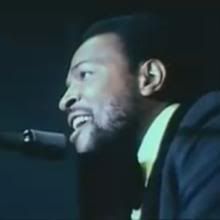
Marvin Gaye Marvin Gaye
Clay Drayton remembers: "I was playing in Las Vegas with Dee Dee Warwick for six weeks and after three weeks we got a week off and went to Beverly Hills to see Dionne. When I set foot in Hollywood, I knew that I wanted to live there. As soon as the six weeks was over everyone else went back to New Jersey and I moved to Hollywood.
That very day I found an apartment on a side street off of Hollywood Boulevard. As I walked out of the door and started down the street a van drove up and the driver shouted "Clay!".
I looked and it was Mark Davis, the keyboard player we met one year prior at a gig in Chicago.
He asked "Are you living here now?" and I said "Yeah, I just got an apartment".
He asked again "Are you still writing songs?"
"Of course", I answered.
"Well I’m producing Marvin Gaye and Diana Ross, would you like to write for Motown?", he asked."

It's the stuff dreams are made of or, in the words of Clay Drayton, "It was a DIVINE appointment".

Jackson 5

Clay continues: "A short time after that I was on the writing staff at Motown Records, working with some of the best producers in the world. Hal DavisHal Davis: African American songwriter and record producer. One of the key figures in the latter part of The Jackson 5's Motown career. Co-writer and producer of the Jackson 5 hit "I'll Be There", among others would come into the room asking "Anyone got anything for my boys?" (i.e. The Jackson 5). I said "Yeah, I have a few songs", he listened and liked what I had."
As a bass player Mr. Drayton played on many of the Jacksons' sings: "Being a bass player, Joe JacksonJoe Jackson: father and manager of the Jackson 5 and family patriarch asked me to do some things with Jermaine. I also wrote and produced some things on Randy and Janet when they were young. Unfortunately," he says "these things were not released."

Mr. Drayton was also the arranger on "Love Hangover" for Diana Ross. He earned five gold records to his credits on albums from Diana Ross, The Jackson 5, High Inergy and Lenny Williams.
Motown time capsule featuring the song "Love Hangover" by Diana Ross, arranged by Clay Drayton. Year: 1976


20th Century Fox Music

After Motown, Clay Drayton signed with 20th Century Fox Music. He has been president of his own music publishing companies, ClayTam Publishing (with his wife Tami) and Troytiaco Publishing.

Clay is also a member of the Screen Actors GuildScreen Actors Guild (S.A.G.): American labor union representing over 120,000 film and television principal performers and background performers worldwide. According to SAG's Mission Statement, the Guild seeks to: negotiate and enforce collective bargaining agreements that establish equitable levels of compensation, benefits, and working conditions for its performers; collect compensation for exploitation of recorded performances by its members, and provide protection against unauthorized use of those performances; and preserve and expand work opportunities for its members. and has appeared in several commercials, movies and television shows. He has produced Opening Night Productions for several World Conferences, which includes special guests such as M.C. Hammer and Martha Reeves (of Martha and the Vandellas).

Phatfoot

Today, Clay Drayton has even ventured into inventing. Clay explains: "As a bass player, many drummers would ask me to stand in front of their bass drum to keep it from sliding. There was no device to stop the drums from sliding. Drummers used all kinds of crazy things to keep the drum in place. Basically drummers have resolved the problem to using heavy carpets or rugs. Then one night I saw this thing floating in a dream. I jumped out of bed and grabbed a piece of paper and started folding it like origami. And there it was."
Clay continues: "I called someone to create a prototype." After the product was fine-tuned and completed it was tried out by Kenny Elliott who at that time was the drummer for Lou Rawls. Clay: "Kenny loved it: "Man this is amazing!" One of the other drummers he had it tried by was Dean Castronovo of Journey. Dean was blown away."
Today, the Phatfoot Drum Harness is made of glass filled Nylon but only weighs less than 2 oz, making it lightweight and durable.

Roland Washington later performed with Larry Young Jr. (jazz organist) and Chris White (bassist). He founded the Bell Telefunk Company band, which after he departed later evolved into The Dazz Band. Roland Washington currently is a producer and co-host at KPOO FM 89.5.
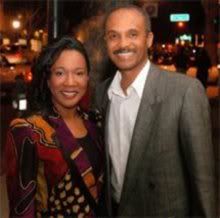
Clay Drayton (right) and his wife Tami Clay Drayton (right) and his wife Tami
A.C. Drummer Jr. has continued to play the guitar. He mainly plays jazz, soul-jazz and jazz-funk and has recorded with Willis Jackson, Lou Donaldson (Jazz Sax) and other artists. He currently lives in North Carolina with his family.
To this day Clay Drayton still plays the bass and can be heard on recordings and during concerts by Marilyn McCoo & Billy Davis, Jr. (ex-5th Dimension). Like Billy and Marilyn, Clay and Tami Drayton have lived the title of Soul Excitement's one and only recording and still Stay Together.


Thanks go to Clay Drayton and Roland Washington!

Info:


Lees verder/Read more
»

gepubliceerd op zaterdag 28 februari 2009

Popmuziek is schatplichtig aan zeventiende eeuwse doedelzakspeler

Een oer-Hollands Sinterklaas wijsje wordt gezongen door de Beatles, meege-'jamd' in de intro van de enige single van de band Soul Excitement, wint een Grammy Award in de outro van een Blood Sweat & Tears hit en wordt pure Rock'n'Roll in een uitvoering van Billy Frazier.
Hoe Hollands is dat Sinterklaas wijsje eigenlijk? En wat heeft een dakloze doedelzakspeler uit Wenen daar mee te maken?


Afbeelding van het vijfenveertig toerenplaatje van de single 'Stay Together' van 'Soul Excitement' Nieuwe vinyl single van "Stay Together" door "Soul Excitement" op het re-issue label Kay-Dee. Op de B-kant "Smile"
Een tijdje geleden stuitte ik op het nummer "Stay Together" van de Amerikaanse band "Soul Excitement". Het nummer was het allereerste dat geschreven werd door bandleider Clay Drayton. Het werd uitgebracht in 1969.
Het nummer is een produkt van zijn tijd. Drayton's muzikale inspiratie was "Sing a Simple Song" van "Sly & The Family Stone". Tot mijn stomme verbazing hoorde ik in de eerste paar maten het "oer-Hollandse" Sinterklaas wijsje "Daar wordt aan de deur geklopt (/ hard geklopt, zacht geklopt. / Daar wordt aan de deur geklopt, / wie zou dat zijn?)".

Bij nader onderzoek blijkt het populaire deuntje meerdere popmusici geïnspireerd te hebben. Paul McCartney zingt op dezelfde wijs "Balls to Mr. Banglestein, / Banglestein , Banglestein. / Balls to Mr. Banglestein, / dirty old man", zoals te horen is op de 'Get Back-sessions' uit 1969. Billy Frazier laat in 1962 "Did you ever see a lassie?" swingen op een Rock'n'Roll ritme. En bovendien wint het nummer "Spinning Wheel" van Blood Sweat & Tears de Grammy voor 'Best Instrumental Arrangement' in 1970; in de outro van het nummer is het Sinterklaasliedje weer te horen op de klanken van een fluit.

Of horen we een doedelzak?

Wenen, 1679

Oorlogen, pestepidemieën en een grondig verpeste economie teisterden Wenen. In 1610 probeerde Bohemen de stad te veroveren en in 1645 probeerde Zweden het ook nog eens.

Wenen beschikte echter over goed versterkte en goed onderhouden vestingwerken. Daardoor weerstond het deze aanvallen, al was de prijs economisch gezien hoog.
Maar tegen één aanval was geen verdedigingsmuur of uitkijkpost opgewassen. In 1679 was het de pest die de stad overviel. Door de pest verloor ruim eenderde van de bevolking van Wenen het leven.

De pestbacterie die de ziekte veroorzaakt verspreidde zich via de beet van vlooien op de zwarte rat. In die tijd wist men dat echter nog niet. Wie nu door deze mooie stad loopt kan zich niet voorstellen dat ruim 300 jaar geleden de lijken in stapels langs de kanten van de straten lagen. Met een soort van hooikarren haalden speciaal aangestelde lijkenruimers de lijken 's nachts op.

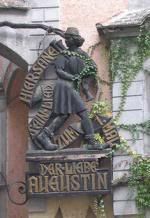
Afbeelding van Marx Augustin "Hier sang sein Lied zum 1. Mal", Der liebe Augustin
In die gruwelijke omstandigheden probeerde Marx Augustin een boterham te verdienen. Augustin was zowel doedelzakspeler, straatzanger als sneldichter. Maar het geld dat hij overdag op straat verdiende gaf hij grotendeels 's avonds in de kroeg al weer uit aan wijn.
Augustin zou erg geliefd zijn geweest. Met zijn grappige liedjes en deuntjes vrolijkte hij de mensen op. En dat konden ze in die sombere tijden goed gebruiken. Augustin stond daarom in de volksmond bekend als "lieber Augustin". Dit betekent zoveel als "beste Augustin" of "goede Augustin".

Marx staat op uit de dood

Volgens de overlevering had Marx op een avond flink teveel gedronken. Onderweg naar zijn slaapplaats voor die nacht viel hij daardoor stomdronken in slaap in een greppel langs de weg.
Zo werd hij gevonden door de lijkenruimers. Door zijn diepe roes hielden die hem voor een van de vele slachtoffers van de Zwarte Dood. En in die waan gooiden zij zijn bewegingloze lichaam op de kar boven op de stapel al opgehaalde lijken. Later die nacht reden ze de kar buiten de stadspoorten om hun lugubere lading te dumpen in een massagraf.

Net op tijd ontwaakte Marx uit zijn roes. Hij joeg de omstanders de stuipen op het lijf toen hij plotsklaps opstond en nog wat onvast de benen nam, als uit de dood herrezen. Daarmee was het gerucht geboren dat wijn niet alleen een geneeskrachtige, maar zelfs een preventieve werking had tegen de pest.

De werkelijke reden dat Augustin deze ontmoeting met de Zwarte Dood overleefde is een geheel andere. De vlooien die de pestbacterie bij zich droegen hadden zich namelijk al lang vol gezogen met het bloed van hun slachtoffers. In de lijkkar zal daarom niet één hongerige - en dus gevaarlijke - vlo meer gezeten hebben.

Doedelzakspeler wordt succesvol componist

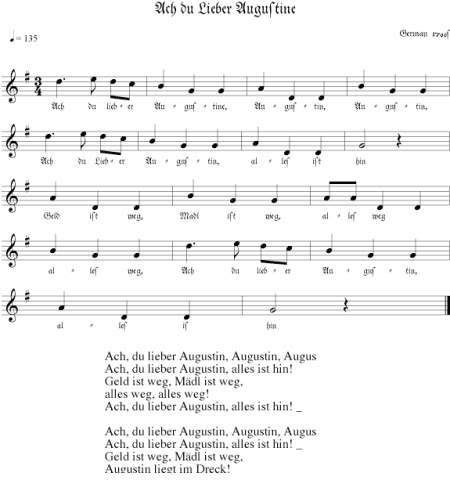
Zijn populariteit werd door dit voorval nog groter. Als sneldichter had Marx al vlot zijn ervaringen op rijm gezet. Daarna schreef hij er ook eigenhandig nog muziek voor. Het tempo dat hij gebruikte was een een driekwartsmaat. Tegenwoordig herkennen wij dat als een wals. Het liedje "O du lieber Augustin" wordt door velen gezien als de opmaat voor de Weense wals, al worden hier op internet stevige discussies over uitgevochten. (opm.: de eerste echte Weense wals verscheen pas in 1786 (volgens sommige bronnen 1776) in de opera "Una Cosa Rara", geschreven door de Spanjaard Vicente Martín y Soler, die trouwens samen met Mozart en Salieri de positie van hofcomponist bekleedde in Wenen)

Afbeelding van bladmuziek voor Bladmuziek voor "O du lieber Augustin", bron:kitchenmusician.net
Je kunt het meezingen op de wijs van "Daar wordt aan de deur geklopt":
O du lieber Augustin, Augustin, Augustin,
O du lieber Augustin, alles ist hin.

Geld ist weg, Mensch ist weg,
Alles hin, Augustin.
O du lieber Augustin,
Alles ist hin.

Rock ist weg, Stock ist weg,
Augustin liegt im Dreck,
O du lieber Augustin,
Alles ist hin.

Und selbst das reiche Wien,
Hin ist's wie Augustin;
Weint mit mir im gleichen Sinn,
Alles ist hin!

Jeder Tag war ein Fest,
Und was jetzt? Pest, die Pest!
Nur ein groß' Leichenfest,
Das ist der Rest.

Augustin, Augustin,
Leg' nur ins Grab dich hin!
O du lieber Augustin,
Alles ist hin!


Zie ingeb.org voor de gehele tekst

Het deuntje werd al snel populair. Zo populair zelfs, dat het gerust tot de zeventiende eeuwse popmuziek gerekend mag worden. En volgens de overleveringen heeft Marx Augustin dan ook goed kunnen leven van het verhaal over zijn 'opstanding' en van het liedje 'O du lieber Augustin'.

Van Weense wals naar wereldhit

Marx' 'popliedje' bleek een blijvertje. Een kleine negentig jaar na zijn dood werd het liedje gebruikt in het ballet "La Dansomanie", geschreven door Gardel, dat in 1793 in Parijs werd geproduceerd.

In 1812 was het vanuit het moderne en toonaangevende Parijs overgewaaid naar de ballrooms in Engeland waar de Britse adel zich vermaakte. De choreografie die Gardel schreef op basis van het deuntje van Marx Augustin werd in Engeland in eerder instantie weggehoond. Maar nadat keizer Alexander in 1816 aan de dans had deelgenomen in de Almack werd het alsnog in korte tijd populair. De Almack was dé danszaal van die tijd (zie de blog Nineteen Teen voor een artikel over Almack, "Heaven, Regency Style").

Van wereldhit naar kinderhit

De melodie van het originele Weense popliedje van Marx is nog steeds de basis voor populaire variaties, met name in de Angelsaksische wereld. Zo is het onder meer 'vertaald' in een populair Engels kinderliedje. De tekst is gewijzigd, maar de muziek is zo goed als onveranderd, zoals te horen en te zien is op Youtube:

"Did You Ever See a Lassie" door de Australische kinder muziekgroep "The Wiggles", zie ook Wikipedia en de website van The Wiggles
Did you ever see a lassie, a lassie, a lassie? Did you ever see a lassie go this way and that? Go this way and that way, go this way and that way. Did you ever see a lassie go this way and that?
In de loop der tijd heeft de melodie de fantasie geraakt van velen. Er bestaan de merkwaardigste variaties op de tekst, alle gezongen op hetzelfde wijsje:
  • "Did you Ever See a Lassie" (Schotland),
  • "The More We Get Together / Together, together / Oh, the more we get together / The happier we'll be." (US),
  • "I'm a Little Dutch Girl" (waar 'Dutch' vermoedelijk is afgeleid van 'Deutsch' en dus niets met Nederland te maken heeft),
  • "Can't put you muck in our dustbin / our dustbin, our dustbin" (UK, ca. 1950),
  • "See the little angels / Ascend up, ascend up / See the little angels / Ascend up on high",
  • "Love to be in Copenhagen",
  • "Have you ever seen a horse fly",
  • "Daar wordt aan de deur geklopt" (NL, ca 1906),
  • "Balls to Mr. Banglestein / Banglestein, Banglestein / Balls to Mr. Banglestein / dirty old man" (Beatles, "Get Back Session", jan. 1969 - Paul zingt "Balls To Mr Banglestein, etc"); zie hier voor de volledige tekst van dit 'gebed',
  • "'t Peerd van Ome Loeks is dood / Loeks is dood, Loeks is dood / 't Peerd van Ome Loeks is dood, helemaal dood / Gister'n nog kern gezond / sloeg met zien steert in 't rond / 't Peerd van Ome Loeks is dood, hartstikke dood" (Groningen NL, Damrakkertjes, jaren '80).
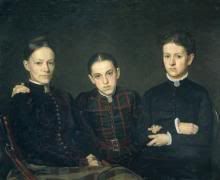
Portret van Cornelia, Clara en Johanna Veth Cornelia (1848-1945), Clara (1867-1948) en Johanna Veth (1852-1932), portret door hun broer Jan Veth, 1884, Rijksmuseum Amsterdam

Ook de Duitse componist A.H. Wenck (ca. 1750 - ca. 1814) ontkwam niet aan deze fascinatie. Wenck publiceerde verschillende variaties op "O du lieber Augustin" in de tijd dat hij in Amsterdam woonde en werkte. En ook hij schreef weer nieuwe teksten en nieuwe arrangementen gebaseerd op het oude zeventiende eeuwse Duitstalige volksliedje. Hoewel ik er geen bewijs voor gevonden heb, is het zeer waarschijnlijk dat zijn publicaties later onder ogen kwamen van de Groningse zanglerares Johanna Francina Veth (1852 - 1932). De melodie die zij zo leerde kennen werd in 1907 de basis voor haar Sinterklaaslied "Daar wordt aan de deur geklopt". Waar Marx Augustin uiteindelijk aan overleed laat de geschiedschrijving niet weten, slechts dat het in oktober 1705 was. In 1685 had hij nog de Turkse invasie van Wenen meegemaakt. Hij ligt begraven op de Nikolai begraafplaats in Wenen. Nooit heeft hij kunnen bedenken dat vorsten zouden dansen op het simpele volksliedje dat hij schreef. Maar dat zijn popliedje ook nog in de huidige popliedjes gebruikt wordt had hem ongetijfeld deugd gedaan. "Lieber Augustin" mag dan het enige nummer zijn dat we aan Marx Augustin kunnen toeschrijven, maar daarmee heeft deze tijdgenoot van J.S. Bach en Henry Purcell dan toch een stevige voetafdruk achtergelaten in de muziekgeschiedenis.

Terug in de eenentwintigste eeuw

Clay Drayton en zijn vrouw Tami in 2008 Clay Drayton en zijn vrouw Tami in 2008
Ik begon met "Soul Excitement", die het originele deuntje van Marx Augustin in 1969 gebruikten in de introductiematen van hun funknummer "Stay Together". Over die obscure eerste maten vertelt bandleider Clay Drayton in een exclusief interview aan Mooimuziek: "I wrote it from an American children's song 'The more we get together, the happier we'll be'"
Op Spotify kun je het nummer ook beluisteren: Drayton zou daarna nauw samengewerken met onder meer de Jackson 5, Dee Dee Warwick en Diana Ross. Het interview met Clay Drayton wordt binnenkort gepubliceerd op Mooimuziek.

Marx Augustin: historie of legende...

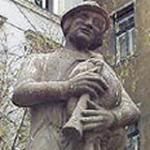
Standbeeld van Marx Augustin Standbeeld van Marx Augustin in het zevende arrondissement van Wenen, Neubau
In Duitsland en in Oostenrijk is het volksverhaal van Marx Augustin bij iedereen bekend. Het liedje heeft er de status van officieus volkslied. En in Wenen is voor Augustin zelfs een standbeeld opgericht. Maar waarschijnlijk heeft dit meer te maken met zijn rol in de legende van 'Lieber Augustin', dan met de historische persoon Marx Augustin. De toeristische industrie spint immers goed garen bij het verhaal van de doedelzakspeler die uit de dood verrees. Ondanks de vele verhalen en aanwijzingen is het historisch gezien niet te bewijzen dat Marx Augustin ook daadwerkelijk aan de basis gestaan heeft van "O du lieber Augustin". Sterker nog: men weet zelfs niet zeker of hij werkelijk heeft bestaan.
Info: Wikipedia artikel over Oh, du lieber Augustin (en) Wikipedia artikel over de Zwarte Dood House of Mirth Op juno records is de nieuw uitgebrachte single van Soul Excitement te bestellen Lange discussie over de tekst van "Ach, du lieber Augustin" op Mudcat.org Het HEMONY Ensemble heeft een 2CD uitgebracht onder de titel "Daar wordt aan de deur geklopt" Informatie over de familie Veth Volksmusik und Volkslied in Wien, geschreven door Gertraud Schaller-Pressler, ISBN 382588659X 9783825886592, uit. Wien Münster Lit


Lees verder/Read more
»